Amed Sunset: Where to Watch, When to Go and What to Expect
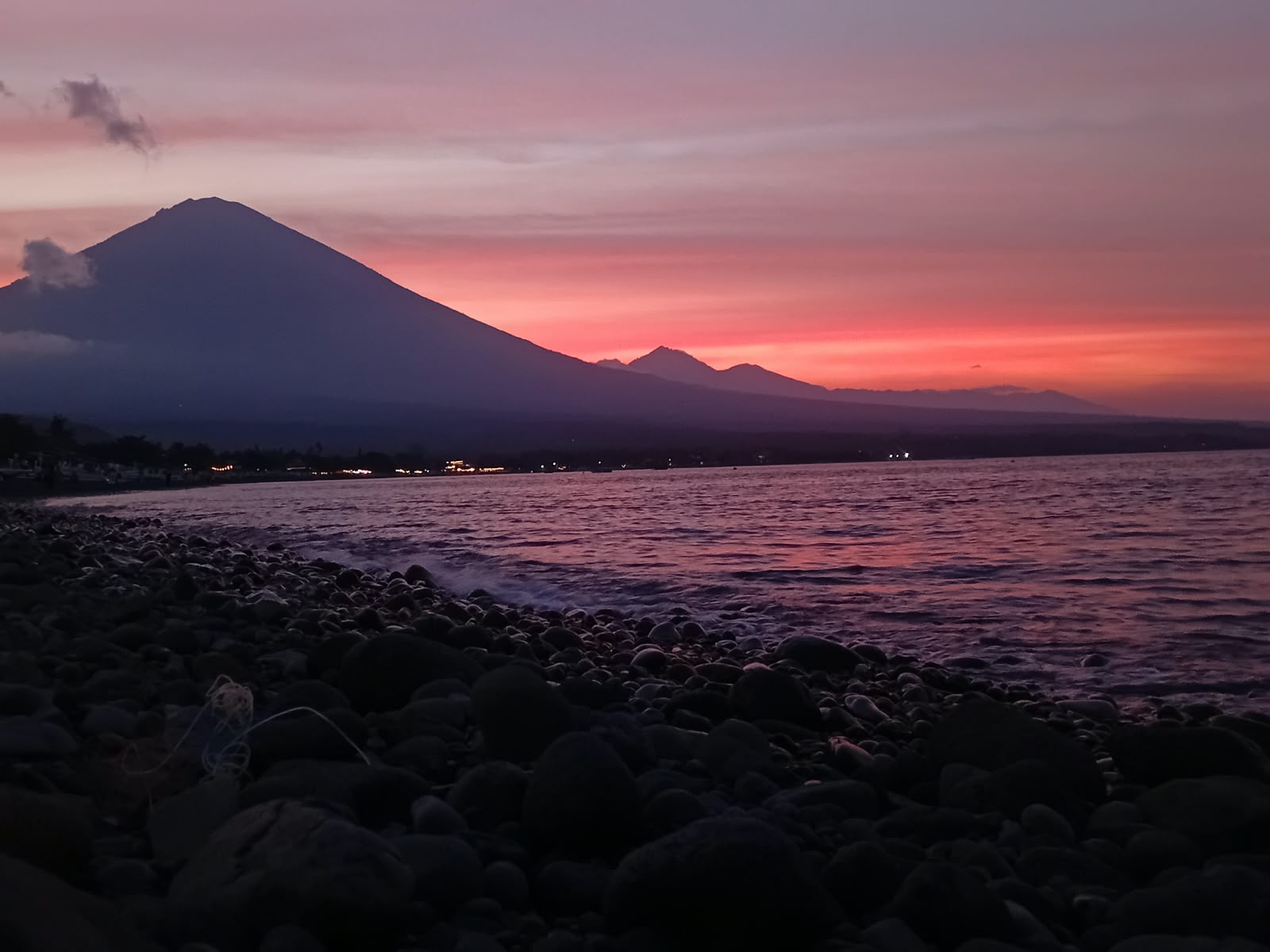
If you’re planning a trip to the northeast coast, the Amed sunset deserves a spot on your list. It’s quieter than Bali’s famous west-coast sunsets, and it’s a different kind of show. We’re PADI instructors based here, and after a morning of diving, a sunset on the beach is how most of our students end the day.

How the Amed Sunset Is Different

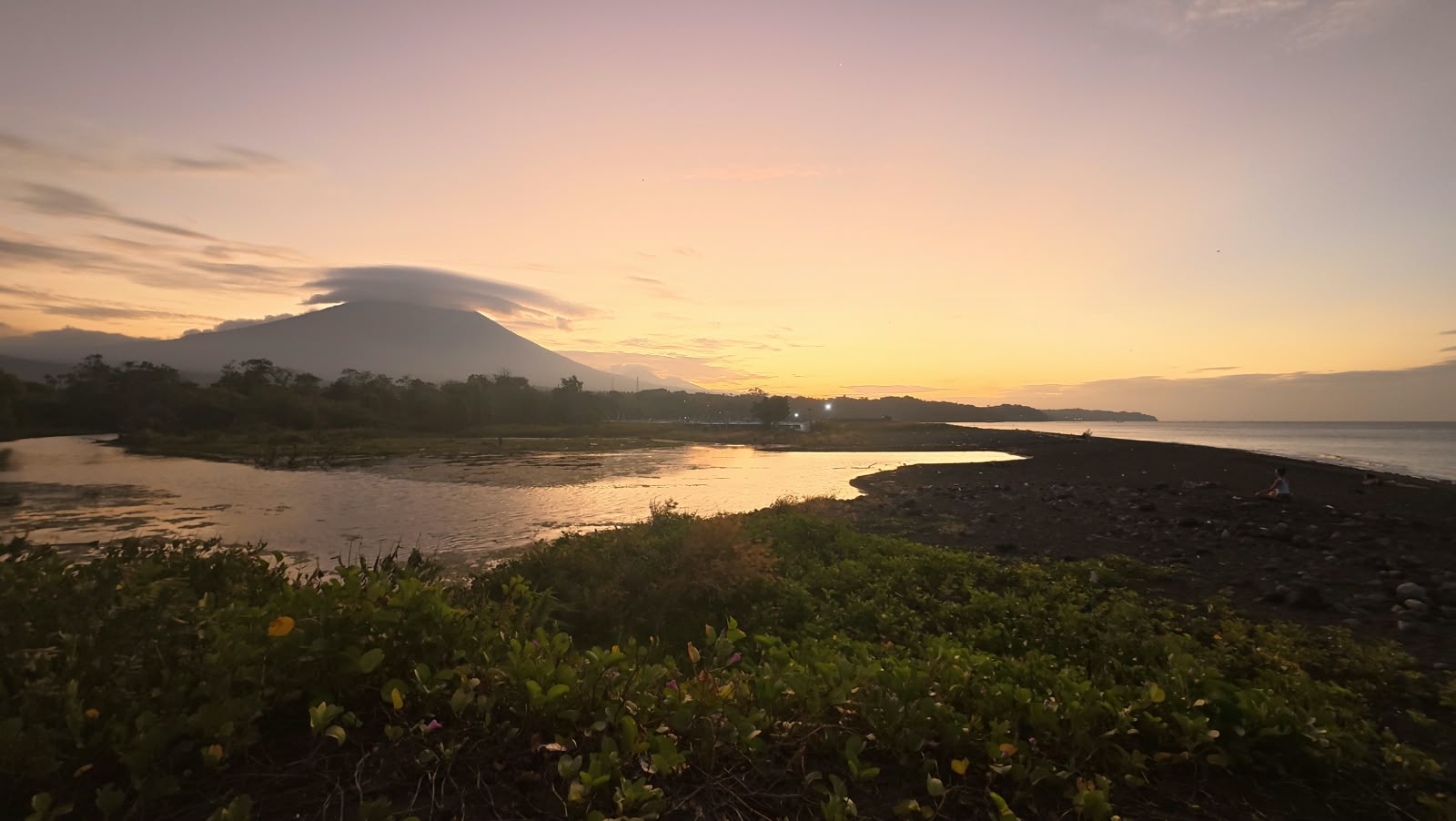
Amed faces east, so the sun doesn’t drop into the sea here. It sets behind the hills and Mount Agung inland. You don’t get the classic “sun touching the horizon” shot, but you get something nice in return:

  • Warm golden light on the black sand and colourful jukung fishing boats
  • The volcano turning to a dark silhouette against an orange sky
  • Pink and purple colours reflecting over the water after the sun is gone
  • Far fewer people than the west coast

On a clear evening you can also see the sea glowing and, sometimes, Lombok across the strait.

Best Spots to Watch the Amed Sunset

  • Jemeluk Bay: the easiest choice. Sit on the beach or at a seafront warung, with boats on the sand and the reef just in front of you.
  • Lipah Beach: a wide, calmer stretch of black sand with plenty of space to yourself.
  • Bunutan: a quiet, local-feeling corner of the coast, good if you want to avoid the crowds.
  • The hill viewpoints above Jemeluk: a higher view over the bays, worth the short climb for photos.

What Time Is the Amed Sunset?

Bali sits close to the equator, so sunset stays fairly steady all year, usually between about 5:45 and 6:20 pm. Because the sun goes behind the hills, the light fades a bit earlier than the official time. Aim to arrive 45 minutes early and stay about 20 minutes after, when the sky colours peak.

Best Time of Year for an Amed Sunset

The dry season, roughly April to October, usually gives clearer skies and better views of Mount Agung. In the wetter months, clouds can hide the volcano, but you still often get a good evening glow between showers. Check the sky around mid-afternoon and decide then.

Plan Your Day: Dive in the Morning, Watch the Sunset in the Evening

Morning is usually the best time to dive in Amed. The sea is calm and the visibility is good, which also keeps beginners relaxed. That leaves your afternoon and evening free for the beach.

Interested in diving while you’re here? Our small groups are usually 1 instructor to 2 students, never more than 4, and we teach at your own pace. See our PADI Discover Scuba Diving and PADI Open Water Diver course, or read our guide to scuba diving in Amed.
Scuba divers relaxing on the beach after a day of diving, enjoying the Amed sunset

Tips for Enjoying the Amed Sunset

  • Arrive early and pick your spot before the light changes
  • Bring a light layer, since it can cool off after dark
  • Carry a small torch or use your phone light for the walk back
  • Order dinner at a beachfront warung and watch the show from your table
  • Take care on scooters after dark, as roads can be dim and uneven
  • Keep your camera ready for the colour after the sun has gone, not only before

Amed Sunset FAQ

Can you see the sun set over the sea in Amed?
Not usually. Amed faces east, so the sun sets behind the hills and Mount Agung. The colours reflect on the sea afterwards.

What is the best place to watch the Amed sunset?
Jemeluk Bay is the easiest and most popular. Lipah Beach and Bunutan are quieter.

Is Amed good for sunrise too?
Yes. Because Amed faces east, sunrise over the water is the highlight for many visitors.

What time should I arrive?
About 45 minutes before the listed sunset time.

Can I dive and watch the sunset on the same day?
Yes. Dive in the morning, rest in the afternoon and watch the sunset in the evening.

Book Your Amed Trip With Us

Want to see Amed from below the surface as well as from the beach? Get in touch and we’ll help you plan your dives around your days here.

Why Take a Nitrox Course in Amed

A Nitrox course in Amed, Bali is a simple way to improve your diving experience and extend bottom time safely. Enriched Air Nitrox helps reduce nitrogen absorption, which is especially useful when diving multiple days in a row.

Because Amed offers calm conditions and easy shore access, divers can learn Nitrox in a relaxed environment and focus fully on understanding dive planning and safety.

What You Will Learn in the Nitrox Course

Understanding Enriched Air Nitrox

During the Nitrox course, the instructor explains how enriched air works and how to use it correctly. You learn how oxygen percentages affect dive limits, how to analyze a Nitrox cylinder, and how to plan dives using Enriched Air.

The course is theory-based and can usually be completed in a short time. After certification, you can immediately start using Nitrox on qualified dives.


Who the Nitrox Course Is For

Designed for Certified Divers

The Nitrox course in Amed is suitable for certified divers who want longer bottom times and more flexibility during repetitive dives. It works particularly well for divers planning multiple dives per day or extended dive trips in Bali.

No deep diving experience is required.

Nitrox Training with Ecodive Amed

Clear, Practical, and Safety-Focused Instruction

At Ecodive Amed, instructors teach Nitrox in small groups to ensure clear explanations and personal attention. The course focuses on real dive scenarios rather than theory alone.

Learn more about scuba diving in Amed

Using Nitrox While Diving in Amed

Ideal Conditions for Enriched Air Diving

Many dive sites around Amed are well suited for Nitrox use. Shore diving, minimal currents, and stable conditions allow divers to enjoy longer dives with relaxed profiles.

For international training standards, you can read more about the
PADI Enriched Air Nitrox course.

Get Nitrox Certified in Amed, Bali

A Simple Upgrade to Your Diving

A Nitrox course in Amed, Bali is an easy upgrade for certified divers. Train with Ecodive Amed and enjoy safer, more comfortable diving in one of Indonesia’s most relaxed dive destinations.

You may also be interested in our
advanced diving courses in Bali.

Christmas and New Year Specials at Ecodive Bali, Amed’s oldest and still best dive center.
Contact us now for more details!

Scuba diving is often perceived as an adventurous and somewhat daunting activity, but in reality, learning to scuba dive is a structured and manageable process that is accessible to many people. The combination of modern equipment, comprehensive training programs, and a supportive diving community makes it easier than ever to take the plunge into this underwater world.

Initial Curiosity and Interest

Many prospective divers start with a fascination for the ocean and its mysterious depths. This curiosity is the first step in making the learning process feel less like a chore and more like an exciting journey. The beauty of colorful coral reefs, the thrill of swimming alongside marine life, and the allure of underwater exploration provide a strong motivation.

Structured Training Programs

The journey to becoming a certified scuba diver begins with enrolling in a diving course. Organizations such as PADI (Professional Association of Diving Instructors) and NAUI (National Association of Underwater Instructors) offer globally recognized certification programs. These courses are meticulously designed to cater to beginners, breaking down the learning process into manageable steps.

Theory and Knowledge Development

The first phase of the training focuses on theory, where learners are introduced to basic principles of diving. This includes understanding the effects of pressure underwater, the functionality of diving equipment, and essential safety protocols. Modern advancements have made this part even more accessible. Online learning modules allow students to study at their own pace, ensuring they grasp the fundamental concepts before moving on to practical applications.

Confined Water Training

Once the theoretical part is covered, the next step is confined water training, typically conducted in a swimming pool. Here, students get hands-on experience with the diving gear. They learn to assemble and check their equipment, practice breathing underwater, and master essential skills like clearing a flooded mask and recovering a regulator. This controlled environment provides a safe space to build confidence and comfort in using the equipment.


diving with martin slisans bali

PADI IDC in June with Ecodive Bali
June 19 – July 3, 2018

Ecodive Bali in conjunction with PADI Course Director Martins Slisans is proud to announce our next scheduled IDC (Instructor Development Course) for 2018 to be held from June 19 – July 3 in Amed, Bali.

Instructor Examination (IE) in Amed, July 5 /6

For information on prices and scheduling, please contact us.

Ecodive Bali in conjunction with My PADI IDC Asia and Course Director Martin Slisans is proud to announce the successful completion of our fourth PADI IDC (Instructor Development Course) held in Amed from Nov. 14 – 30, 2017.  All ten candidates passed the Instructor Examination (I.E.) conducted by PADI Regional Manager Paul Tanner from Dec. 1 – 2 and are now PADI Open Water Scuba Instructors.  Well done all!

PADI Rescue Diver Course with Course Director Martin Slisans

Rescuing an unconscious diver from depth.
This is just a simulation!

Read more about PADI Rescue Diver Course with Ecodive Bali


PADI Rescue Diver Course with Course Director Martin Slisans